ACM Multimedia 2026 Workshop

JAV-CG The 1st International Workshop on Joint Audio-Video Comprehension and Generation

A dedicated forum for the next wave of audio-video intelligence, spanning robust multimodal understanding, synchronized generation, and unified models that bridge perception and creation.

JavisVerse logo
AUDIO
VIDEO
JOINT AI
VenueRio de Janeiro, Brazil
Workshop Day14 November 2026 · 14:00–17:30 (UTC−3)
RoomOceania VII
ScopeComprehension, Generation, Unified AV
About

Joint AV intelligence.

Real-world multimedia is naturally audio-visual, yet many multimodal systems still treat sound as a side channel. JAV-CG focuses on models that listen, see, reason, and generate synchronized multimedia in one coherent framework.

The workshop brings together multimedia, audio and speech, computer vision, and multimodal foundation-model communities to sharpen the research agenda for audio-video comprehension and generation.

Important Dates

Timeline and milestones.

01

Workshop Paper Submission

30 July 2026

Extended JAV-CG workshop contribution deadline.

02

Author Notification

06 August 2026

Acceptance notification for workshop submissions.

03

Camera-Ready / Final Metadata

20 August 2026

Final accepted material and metadata due under the ACM MM 2026 workshop schedule.

04

Author Registration

20 August 2026

Registration deadline for accepted workshop contributions.

05

ACM Multimedia 2026

10-14 November 2026

Conference venue: Rio de Janeiro, Brazil.

06

Workshop Day

14 November 2026

Saturday, 14:00–17:30 in Rio de Janeiro (UTC−3). Room: Oceania VII.

Call for Papers

Topics and submission.

JAV-CG welcomes archival workshop papers intended for the ACM MM 2026 workshop proceedings, as well as non-archival featured-paper submissions for workshop presentation. Technical, position, and perspective papers may be up to 8 pages plus references.

ACM format Double blind English only Archival + non-archival

Audio-Visual Comprehension

  • Sound source localization and source separation
  • Audio-visual event detection and localization
  • Question answering, grounding, and scene reasoning
  • Trustworthy and long-form audio-visual understanding

Audio-Video Generation

  • Video-to-audio and text-to-audio-video synthesis
  • Audio-driven video generation and talking heads
  • Foley, spatial audio, multimodal editing, and music
  • Controllable synchronized generation across modalities

Unified AV Frameworks

  • Any-to-any multimodal generation involving audio and video
  • Joint tokenization, alignment, and representation learning
  • Unified encoder-decoder or MLLM architectures
  • Benchmarks, datasets, metrics, safety, and evaluation

The submission deadline has passed. Workshop contributions are available on OpenReview.

Speakers

Keynote and invited speakers.

Three perspectives on audio-visual intelligence. Explore the talks and meet the speakers.

Keynote 40 min · incl. Q&A
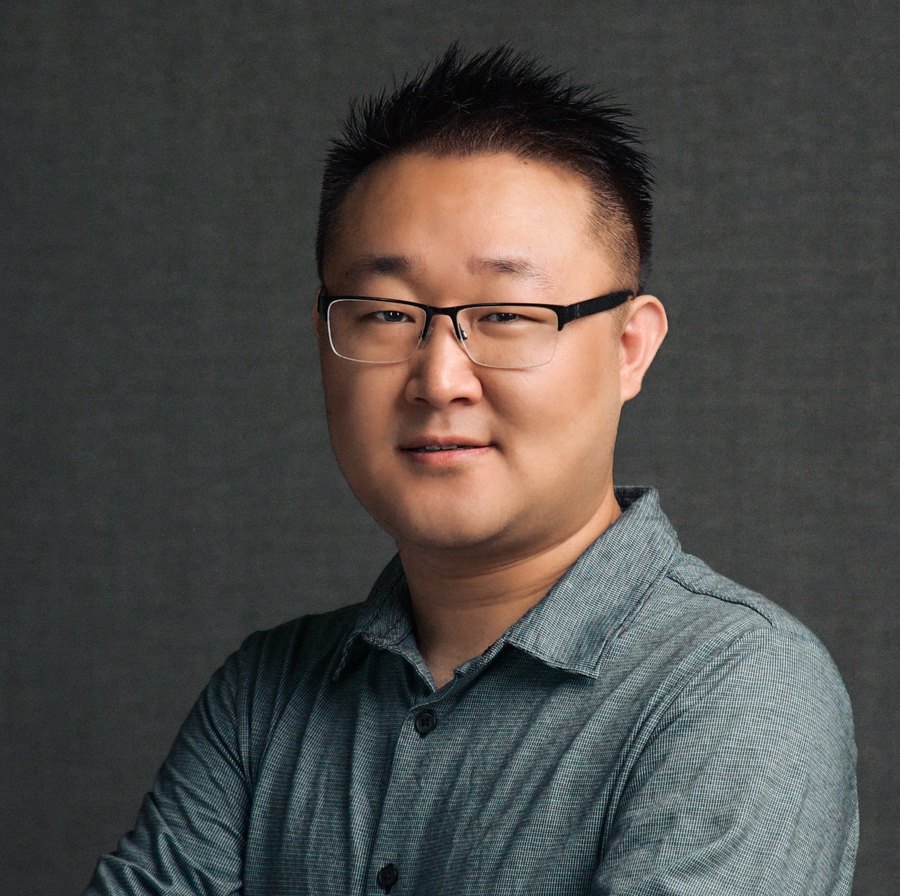
Yapeng Tian

Yapeng Tian

Assistant Professor

The University of Texas at Dallas

Homepage

Towards Holistic and Physically Consistent Audio-Visual Generation

14 November · Rio de Janeiro (UTC−3)
Talk abstract

Yapeng Tian

Towards Holistic and Physically Consistent Audio-Visual Generation

Generating rich audio-visual experiences requires integrating visible events, sounds beyond the camera’s view, and the physical relationships connecting what we see and hear. In this talk, I will present our recent work on multimodal generation, progressing from holistic audio generation to evaluating physical consistency in jointly generated audio and video. I will first introduce VinTAGe, which combines video and text conditioning to generate temporally synchronized on-screen and off-screen sounds while addressing modality bias. I will then present OmniSonic, which integrates speech with environmental sounds to enable more complete auditory scene synthesis. Finally, I will examine a fundamental question: do joint audio-video generation models understand physics? Through AV-Phys Bench, I will discuss how we evaluate physical commonsense within and across audio and video, and what current models reveal about the gap between perceptual plausibility and physical consistency. I will conclude with opportunities for building more controllable multimodal generative systems that faithfully capture the dynamics of the physical world.

Speaker biography

Yapeng Tian

Yapeng Tian is an Assistant Professor in the Computer Science Department at UT Dallas, where he leads the Computer Vision and Multimodal Computing Lab. His work has been recognized by the AAAI New Faculty Highlights, Cisco Faculty Research Award, and Amazon Research Award.

Invited talk 45 min
Hao Fei

Hao Fei

Senior Postdoctoral Researcher

University of Oxford

Homepage

Audio-Visual Intelligence in Large Foundation Models: A Comprehensive Survey

14 November · Rio de Janeiro (UTC−3)
Talk abstract

Hao Fei

Audio-Visual Intelligence in Large Foundation Models: A Comprehensive Survey

Audio-Visual Intelligence (AVI) has emerged as a central frontier in artificial intelligence, bridging auditory and visual modalities to enable machines that can perceive, generate, and interact in the multimodal real world. In the era of large foundation models, joint modeling of audio and vision has become increasingly crucial, i.e., not only for understanding but also for controllable generation and reasoning across dynamic, temporally grounded signals. Recent advances, such as Meta MovieGen and Google Veo-3, highlight the growing industrial and academic focus on unified audio–vision architectures that learn from massive multimodal data. However, despite rapid progress, the literature remains fragmented, spanning diverse tasks, inconsistent taxonomies, and heterogeneous evaluation practices that impede systematic comparison and knowledge integration. This survey provides the first comprehensive review of AVI through the lens of large foundation models. We establish a unified taxonomy covering the broad landscape of AVI tasks, ranging from understanding (e.g., speech recognition, sound localization) to generation (e.g., audio-driven video synthesis, video-to-audio) and interaction (e.g., dialogue, embodied, or agentic interfaces). We synthesize methodological foundations, including modality tokenization, cross-modal fusion, autoregressive and diffusion-based generation, large-scale pretraining, instruction alignment, and preference optimization. Furthermore, we curate representative datasets, benchmarks, and evaluation metrics, offering a structured comparison across task families and identifying open challenges in synchronization, spatial reasoning, controllability, and safety. By consolidating this rapidly expanding field into a coherent framework, this survey aims to serve as a foundational reference for future research on large-scale AVI.

Survey paper

Speaker biography

Hao Fei

Hao Fei is a Senior Postdoctoral Researcher at the Department of Computer Science and the Big Data Institute, University of Oxford. His research focuses on natural language processing, computer vision, and multimodal learning, with an emphasis on large multimodal foundation models.

Keynote 40 min · incl. Q&A
Chenliang Xu

Chenliang Xu

Associate Professor

University of Rochester

Homepage

Multi-level Alignment in Audio-Visual Generation and Learning

14 November · Rio de Janeiro (UTC−3)
Talk abstract

Chenliang Xu

Multi-level Alignment in Audio-Visual Generation and Learning

How can machines connect what they see with what they hear to understand and generate coherent audio-visual experiences? This talk examines audio-visual alignment at multiple levels, ranging from semantic categories and object identities to the geometry and physical acoustics of a scene. I will present our recent work on three related problems. First, I will discuss audio-visual scene synthesis, where neural scene representations and physics-guided generative modeling enable spatial audio synthesis at novel source and listener positions. Second, I will describe sound separation guided by visual or language cues, including how pretrained audio generative models can isolate sounds without task-specific training. Third, I will introduce language-guided joint audio-visual editing, which modifies visual content and its accompanying sound while preserving source characteristics and maintaining consistency across modalities. Together, these studies show how the demands of audio-visual alignment change across tasks, from identifying a sound source to preserving content during editing and modeling how sound travels through a scene. I will discuss what these differences imply for designing models that produce semantically consistent and physically plausible audio-visual content.

Speaker biography

Chenliang Xu

Chenliang Xu is an Associate Professor of Computer Science at the University of Rochester. His research focuses on multimodal AI, integrating vision, sound, and language to understand and reason about dynamic scenes. He has coauthored 150 publications, and his work has received support from federal agencies including DARPA, ARPA-H, NIH, and NSF, as well as industry partners including Meta, Sony, Adobe, and Cisco. His honors include Rochester’s 2025 Edmund A. Hajim Outstanding Faculty Award, the James P. Wilmot Distinguished Professorship, and multiple paper and demonstration awards. He has served as an area chair for CVPR and ACM Multimedia and will serve as a Program Chair for WACV 2028. He received his Ph.D. from the University of Michigan in 2016.

Workshop Program

Program schedule.

Saturday, 14 November 2026 · 14:00–17:30 · Oceania VII. All times below are local to Rio de Janeiro (UTC−3).

Afternoon Workshop

Oral presentations: 12 minutes + 3 minutes Q&A. Keynotes: 40 minutes including Q&A.

Confirmed JAV-CG sessions for 14 November 2026, in Rio de Janeiro local time (UTC−3)
Time (UTC−3)Session
14:00–14:05Opening
14:05–14:45Keynote 1 — Yapeng Tian
Towards Holistic and Physically Consistent Audio-Visual Generation
14:45–15:30Invited Talk — Hao Fei
Audio-Visual Intelligence in Large Foundation Models: A Comprehensive Survey
15:30–16:00Coffee Break & Poster Session
16:00–16:40Keynote 2 — Chenliang Xu
Multi-level Alignment in Audio-Visual Generation and Learning
16:55–17:10EMODY Flow: Emotion-Aware Audio-Driven Full-Body Motion Generation
Oral presentation
17:25–17:30Closing
Poster Session

Meet the poster presenters.

15:30–16:00 · Oceania VII · During the coffee break.

Paper 6

Audio-Visual Joint Fine-Grained Event Recognition Benchmark in Basketball Game

Presenter: Yunhao Zhao

Paper 7

Decoupling Embodied Active Audio-Visual Localization Via Offline Reinforcement Learning

Presenter: Zhuohang Fan (authorized proxy)

Poster preparation

  • Recommended format: A0 portrait, 84.1 cm wide × 118.9 cm high.
  • Panels: 96 cm wide × 212 cm high, with one poster on each side.
  • Poster panels will be inside the workshop room.
  • Hooks are available for hanging posters using strings. Tape will be provided for paper or fabric posters.

Presenters should be available beside their posters during the session to explain their work and answer questions.

Organizers

Meet the organizing team.

You Qin

You Qin

National University of Singapore

Homepage
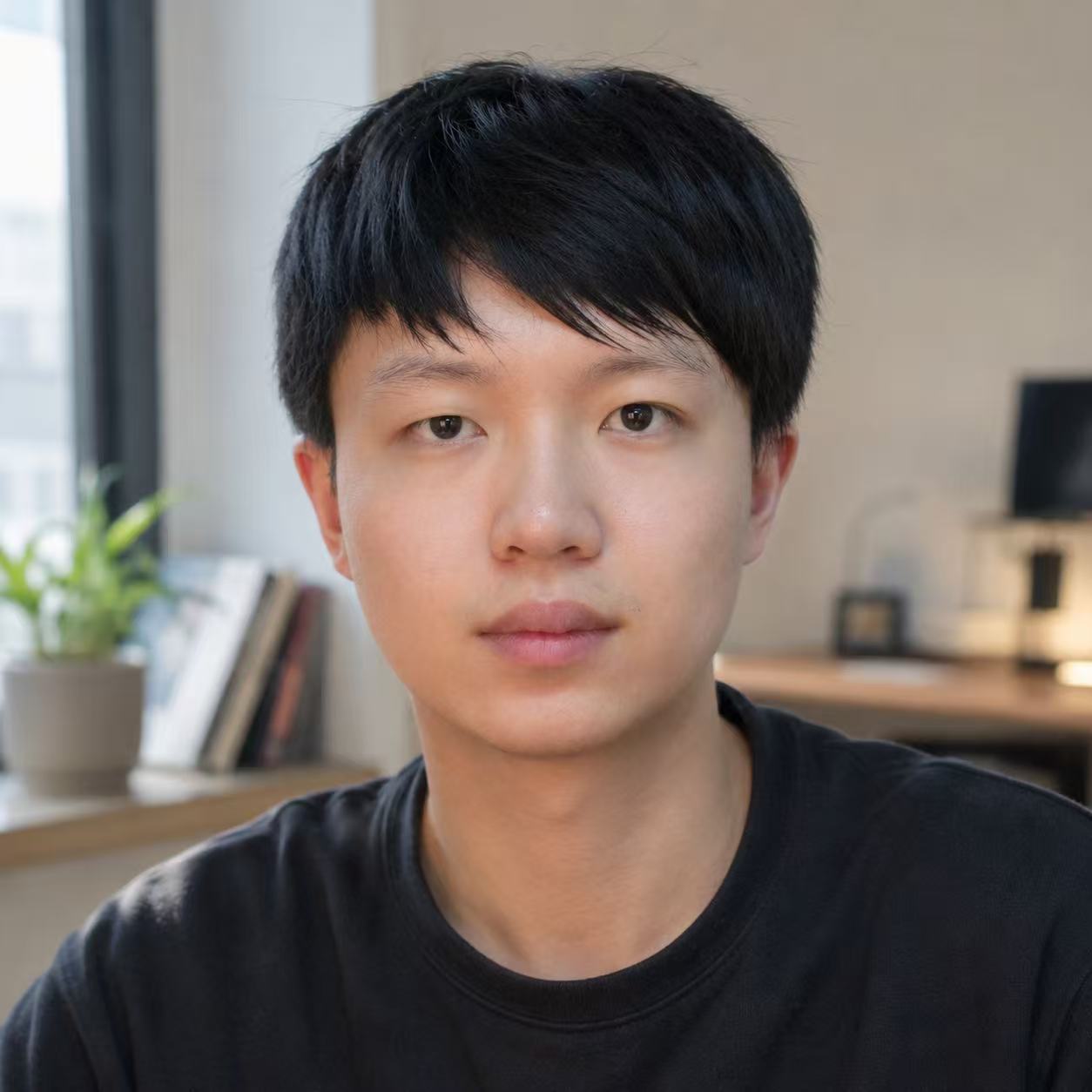
Shengqiong Wu

Shengqiong Wu

University of Oxford

Homepage
Juncheng Li

Juncheng Li

Zhejiang University

Homepage

Liang Zheng

Liang Zheng

Australian National University

Homepage

Roger Zimmermann

Roger Zimmermann

National University of Singapore

Homepage

Jiebo Luo

Jiebo Luo

University of Rochester

Homepage
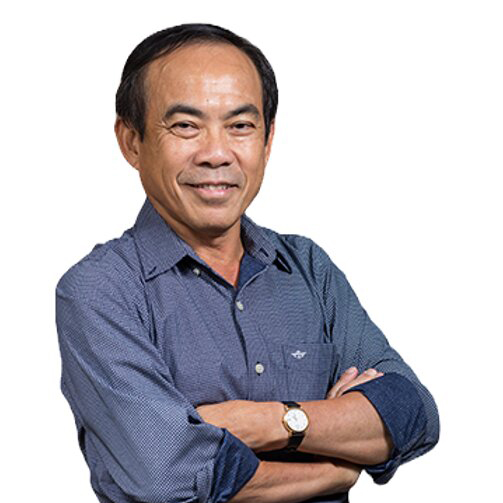
Tat-Seng Chua

Tat-Seng Chua

National University of Singapore

Homepage
Contact

Workshop correspondence